
February 23, 2026
The Pre-Hispanic Settlement of Chinchero
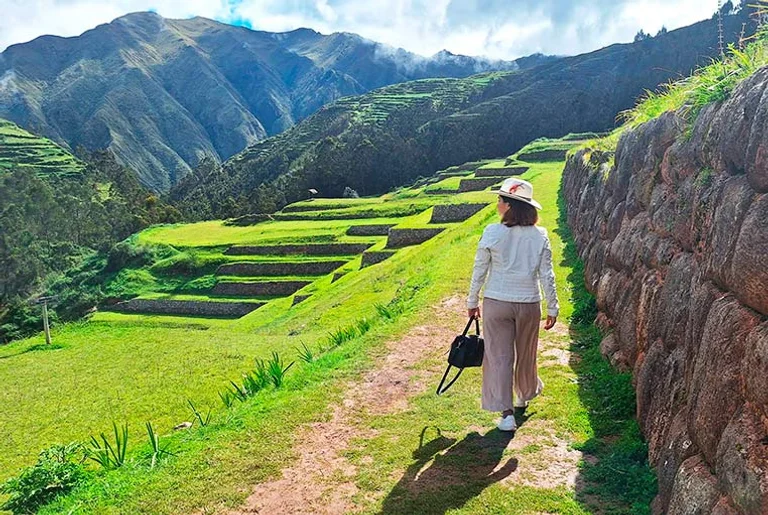
Chinchero is home to a great cultural and architectural heritage due to the Killke and Inca cultures that inhabited this area. Exploring this place means being surrounded by one of the locations with the greatest historical legacy in the entire Sacred Valley. Are you ready to visit it? Learn everything you need to know to make your trip to Chinchero an unforgettable experience.
General information
Chronologically, the archaeological site of Chinchero was inhabited by the Killke culture, who primarily dedicated this area to agriculture and the raising of Andean animals. After the expansion of the Tahuantinsuyo empire, palaces and residences for the Inca elite were built here.
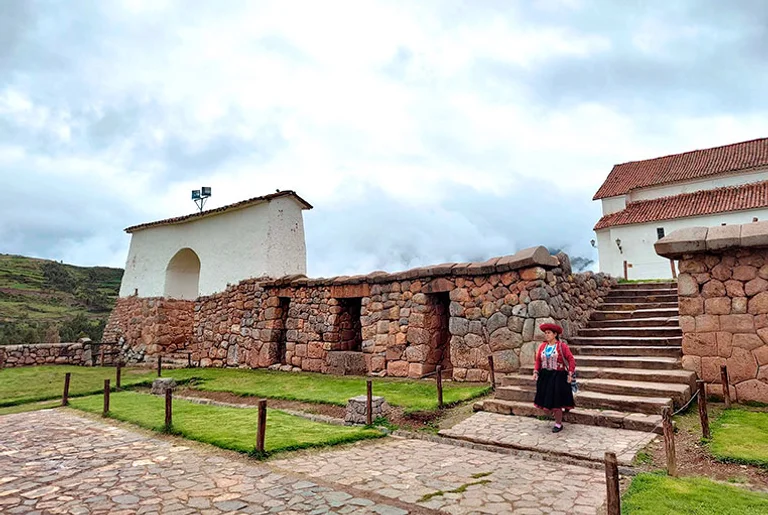
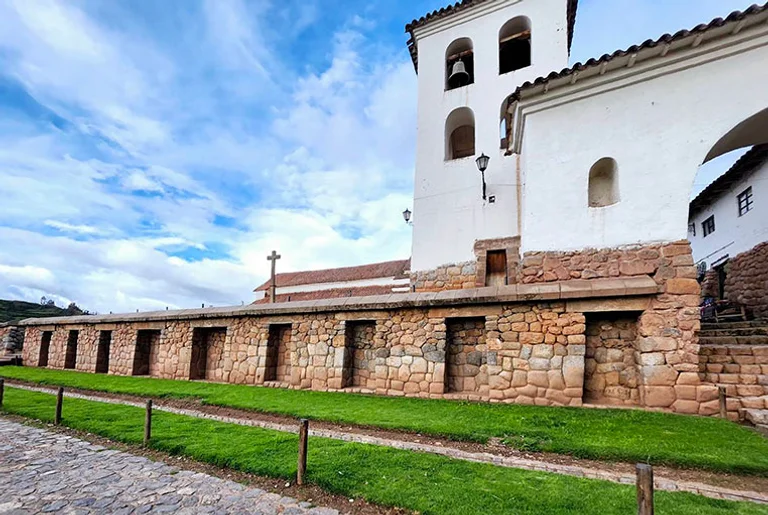
The most important construction in the area was the former temple of Inca Tupac Yupanqui, which was destroyed after the Spanish invasion and replaced by the Church of Our Lady of the Nativity. While visiting the site, you can still appreciate the Inca foundations that have endured.
Other attractions at the archaeological site include: doorways, agricultural terraces, shrines, pre-Hispanic paths, water channels, temples, and spaces dedicated to various functions. In addition, Chinchero has wide natural fields where you can enjoy beautiful views of the Sacred Valley along with the largest and most important snow-capped mountains, such as Salkantay, Chicón, Verónica, and Pitusiray.
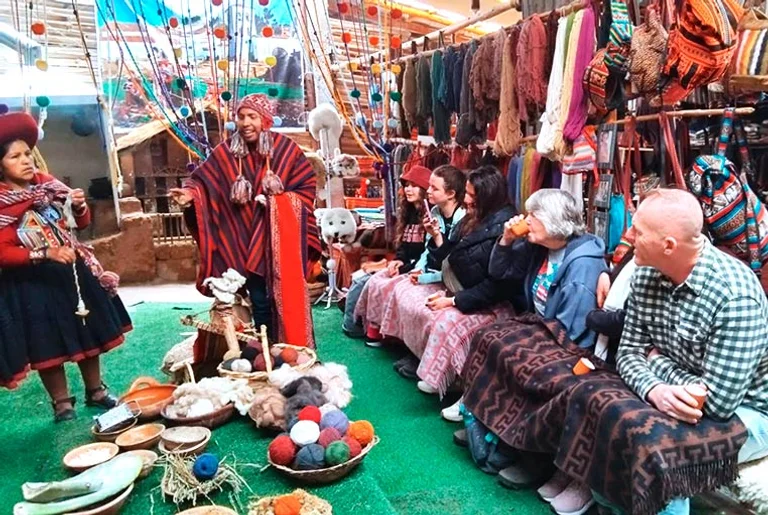
Chinchero is also a place with great intangible heritage, as it is a territory that holds historical cultural expressions in textile art and Andean lifestyle, whose knowledge and techniques are still passed down from generation to generation since Inca times.
Where is Chinchero?
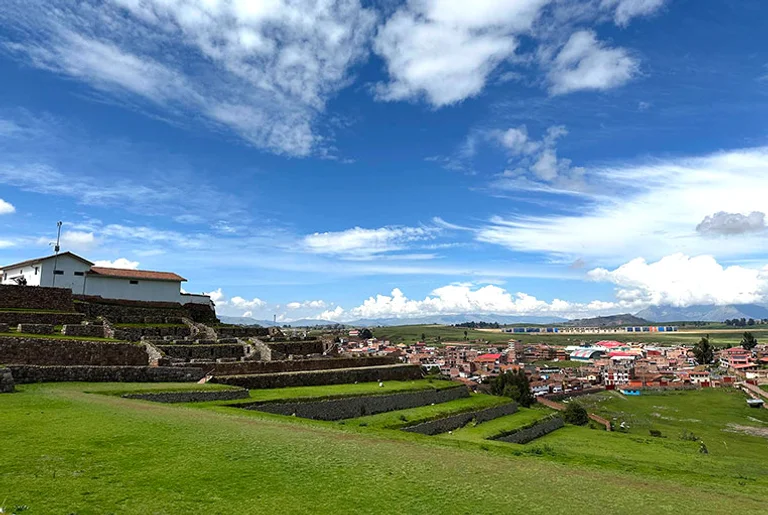
The archaeological site of Chinchero is located in the district of the same name, in the province of Urubamba, 30 kilometers from the department of Cusco. The approximate travel time by car from the city is 1 hour.
Chinchero is situated at 3,762 meters above sea level, one of the highest areas of the Sacred Valley, so you should prepare well with warm clothing and proper acclimatization to prevent altitude sickness.
Entrance and fees
Entrance to Chinchero is included in the partial tourist ticket for Cusco in circuit 3, which can be purchased in person in the city of Cusco or virtually through the Ticketcusco website.
By purchasing this ticket, you will also have access to the most important destinations in the Sacred Valley, including: the archaeological fortress of Ollantaytambo, the archaeological park of Pisac, and the circular terraces of Moray.
The partial tourist ticket for Cusco in circuit 3 costs 29 dollars for foreign visitors and 19 dollars for Peruvians. Additionally, the ticket is valid for two days, allowing you to visit the archaeological sites as you wish.
What is included in the comprehensive tourist ticket for Cusco?
The comprehensive tourist ticket for Cusco includes entry to the archaeological site of Chinchero. Additionally, it grants access to ten archaeological sites (in Cusco, the Sacred Valley, and the Southern Valley), five museums in the city, and a cultural center. The price for foreigners is 50 dollars, while for Peruvians it is 30 dollars (students of all nationalities pay 30 dollars). Another great benefit of the comprehensive tourist ticket is that it is valid for 10 days, allowing you to do a full tour of Cusco.
Visiting hours
The Chinchero archaeological site is open every day of the year, from Monday to Sunday, from 7:00 AM to 5:00 PM.
Visiting Chinchero is part of the classic tours of the Sacred Valley, where the ideal time for the visit is in the morning, as this avoids the cold that can be felt in the afternoon. Additionally, you will be able to better appreciate each of the natural landscapes that this territory has to offer.
Recommended tour
Chinchero is part of the Sacred Valley, so if you want a more complete trip, you can combine it with other important archaeological parks in the area. To enjoy this experience, we recommend purchasing the partial tourist ticket for Cusco in circuit 3, which includes entry to each destination in the following tour.
- Start of the tour: To explore Chinchero in a more complete Sacred Valley tour, we recommend purchasing the Cusco tourist ticket for circuit 3. This travel experience would begin early in the morning from the city heading toward Pisac. Many popular tours follow this route (Pisac, Ollantaytambo, Moray, Chinchero, and sometimes add Maras), which usually takes 12 hours.
- Pisac Archaeological Center: The first destination, making the most of the Cusco tourist ticket for circuit 3, is the Pisac archaeological center. Its structures stand out for their impressive urban, religious, and agricultural constructions that lie on top of a vast mountain in the town of Pisac.
- Ollantaytambo Archaeological Park: Continuing on the route, the next stop is the Ollantaytambo archaeological park, a large Inca fortress built on two mountains. As you tour each historical building, you can also enjoy stunning views of the Sacred Valley.
- Moray Archaeological Complex: On the return route, it’s ideal to visit the Moray archaeological complex, which houses circular terraces in three enormous holes. Its function was to serve as an agricultural laboratory, as each level of the terraces has its own microclimate. Because of its shape, the site is also believed to have been an amphitheater during the Inca period.
- Chinchero Archaeological Site: To end the tour, the last destination will be Chinchero. Among the archaeological site, the ancient temple of Inca Tupac Yupanqui and small ceremonial and residential enclosures stand out.
- End of the tour: The recommended tour to explore the Chinchero archaeological site, along with the partial Cusco tourist ticket for Circuit 3, finishes in the evening, making it a Full Day experience. Keep in mind that this ticket is valid for two days, so you can distribute the destinations as you prefer.
Tips for your visit
- Since Chinchero is located 3,762 meters above sea level, it is recommended to acclimate beforehand in the city of Cusco. By engaging in light activities and resting enough, you can avoid altitude sickness in places like Chinchero.
- The tour of the Chinchero archaeological site is short, and you won’t need to climb stairs or mountains, making it ideal if you want a calm archaeological trip amid the landscapes of the Sacred Valley.
- In the main square of Chinchero, there is a site museum displaying archaeological pieces from the archaeological site, making it ideal for discovering more about the legacy of the place.
- While visiting Chinchero, it is also ideal to explore the traditional textile workshops, where ancestral techniques from the Inca era are preserved.
- The Church of Our Lady of the Nativity, which is built over the foundations of the Inca Tupac Yupanqui temple, houses paintings, sculptures, altarpieces, and altars of great beauty and history.
- For the Inca culture, the presence of mountains was very important, as they were considered “Apus” (sacred spirits). In Chinchero, you can appreciate some of the most important mountains, such as: Salkantay, Chicón, Verónica, Sahusiray, and Pitusiray.
- With Ticketcusco, you can purchase the comprehensive Cusco tourist ticket, as well as partial tickets for each of the three travel circuits. Book now and experience unforgettable adventures.
Frequently Asked Questions
1. What is the Chinchero archaeological site like?
Chinchero is a pre-Hispanic settlement that was inhabited by the Killke and Inca cultures. When visiting, you can explore its terraces, temples, and ceremonial enclosures, as it is one of the places with the greatest cultural legacy in the Sacred Valley.
2. Where is Chinchero located?
Chinchero is located in the district of the same name, in the province of Urubamba, about 30 kilometers from the city of Cusco. The drive takes approximately one hour, making it an ideal destination for a half-day or full-day excursion.
3. What is the altitude of Chinchero?
The archaeological site is located at 3,762 meters above sea level. We recommend acclimating in Cusco beforehand, resting well, and doing light activities before the visit to avoid altitude sickness.
4. What cultures inhabited Chinchero before the arrival of the Spanish?
Initially, Chinchero was inhabited by the Killke culture, who used the area for agriculture and livestock. Later, the Inca culture built palaces and residences for the elite, making it an important administrative and ceremonial center.
5. What structures stand out within the Chinchero archaeological site?
One of the main attractions is the ancient temple of Inca Tupac Yupanqui, on whose foundations the colonial church of Our Lady of the Nativity was built. You can also appreciate enclosures, doorways, agricultural terraces, water channels, and pre-Hispanic paths.
6. What landscapes can I appreciate during the visit to Chinchero?
From Chinchero, and throughout the journey in the Sacred Valley, you can enjoy beautiful views of agricultural fields, lagoons, and iconic snow-capped mountains such as Salkantay, Chicón, Verónica, and Pitusiray.
7. Is Chinchero part of the Cusco Tourist Ticket?
Yes, entry to Chinchero is included in the Cusco Partial Tourist Ticket for Circuit 3. This ticket also provides access to other important sites in the Sacred Valley, optimizing your time and budget during the trip.
8. How much does the Cusco Partial Tourist Ticket cost?
The ticket costs approximately 29 dollars for foreign visitors and 19 dollars for Peruvians. It is valid for two days, allowing you to distribute visits according to your preference.
9. What are the opening hours of the Chinchero archaeological site?
Chinchero is open every day of the year, from Monday to Sunday, from 7:00 AM to 5:00 PM. We suggest visiting in the morning to enjoy better weather conditions.
10. How much time do I need to visit the Chinchero archaeological site?
The tour is relatively short and does not involve demanding stretches. On average, you should spend about one hour to explore the archaeological site calmly and enjoy all the landscapes.